

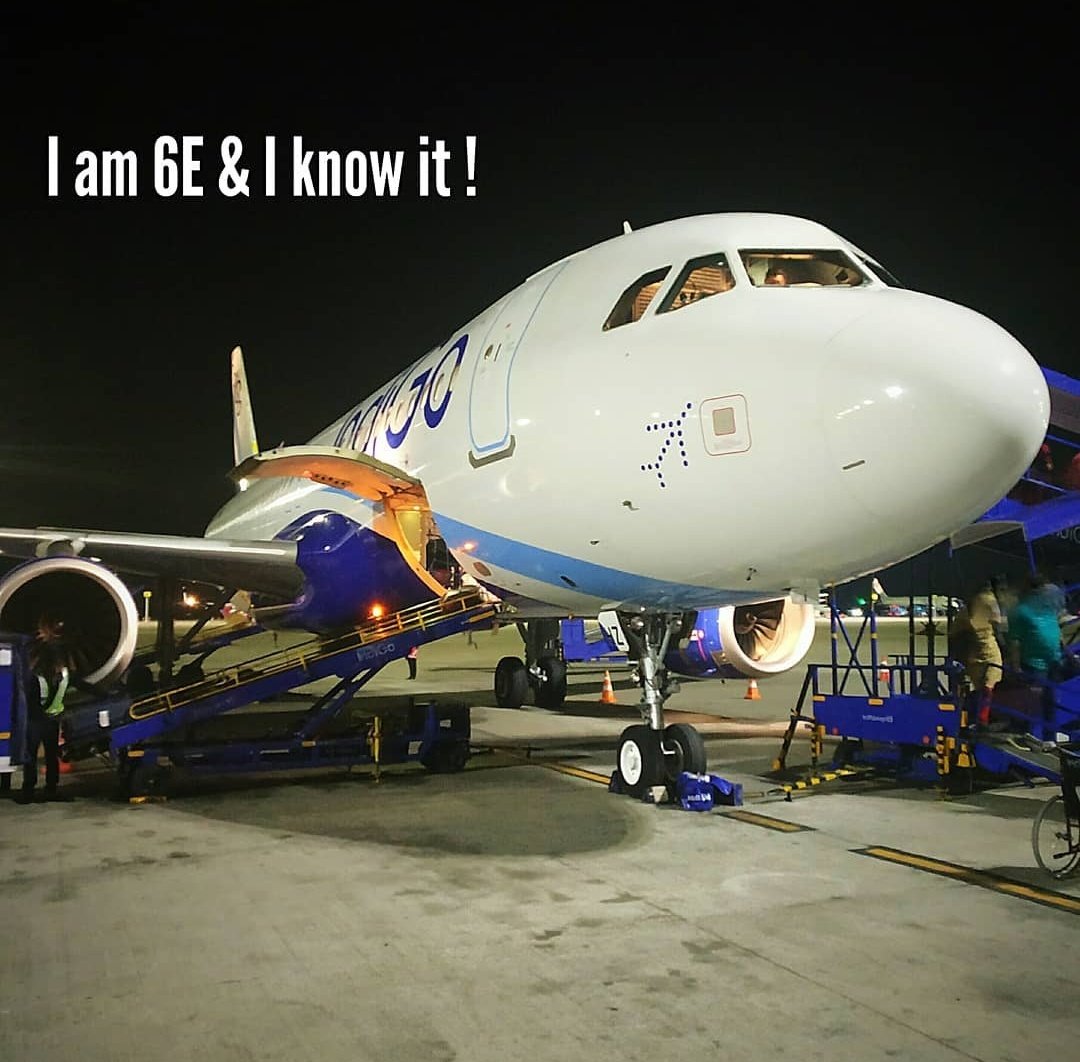
For an airline that has spent years being India’s undisputed profit machine, IndiGo’s quarter ended June 30, 2026 makes for an unusual read. The headline number is stark: a net loss of ₹2.38 billion, compared to a profit of ₹21.76 billion in the same quarter a year ago — a swing of over 110%. Pre-tax profit tells the identical story, flipping from +₹23.1 billion to -₹2.4 billion. Quarterly PAT has fallen every single Q1 since FY24 — ₹30.9 billion, then ₹27.3 billion, then ₹21.8 billion, and now negative. What makes this quarter worth dwelling on is that the loss arrived despite genuinely strong commercial execution, which makes the underlying cost story impossible to ignore. Driven by the challenges with West Asia war, the record domestic numbers have not been enough to turn a profit thanks to a combination of sliding rupee, reduced international exposure and increasing costs, especially fuel.
The revenue engine was firing on all cylinders
The airline fired on all cyinders this summer. Total income rose 18.9% year-on-year to ₹256.1 billion, and revenue from operations climbed 19.9% to ₹245.8 billion. Yield — essentially how much IndiGo earns per passenger per kilometre flown — jumped a striking 21.3% to ₹6.04. Revenue per available seat kilometre (RASK) followed suit, up 16.5% to ₹5.66. This was largely driven by the highest ever domestic traffic in a single month in May and best ever market share for the airline in domestic skies in June.
However, capacity remained muted as the airline had to withdraw multiple destinations and flights due to the West Asia war. Available seat kilometres (ASKs) grew just 2.9%, meaning IndiGo didn’t chase this revenue growth by simply flying more. It got there through pricing power — charging meaningfully more per seat while barely expanding capacity. Load factor dipped slightly, from 84.6% to 83.3%, a modest 1.3-point softening that looks more like the airline willing to let go of the passenger who is not going to pay more rather than focusing on adding more revenue. In isolation, this is the kind of quarter airlines dream about: disciplined capacity, strong pricing, healthy top-line growth, until the cost side is looked at.
Then costs ran away entirely
The problem sits entirely on the other side of the ledger, and it’s almost entirely one number: fuel. Aircraft fuel expenses nearly doubled, rising 85.7% year-on-year to ₹108.3 billion. Fuel cost per ASK went from ₹1.38 to ₹2.49 — an 80% jump on a per-unit basis, a direct result of the increase in oil prices due to the West Asia war.
It didn’t stop at fuel. Total cost per ASK (CASK) rose 32.6% to ₹5.71, but even stripping fuel out, CASK ex-fuel still climbed 10.0% to ₹3.22 — and ex-forex too, at 10.7%. So non-fuel costs were rising at a clip well above general inflation, even before currency effects. And currency didn’t help either: the rupee averaged ₹95.02 to the dollar during the quarter, compared to ₹85.29 a year earlier — an 11.4% depreciation that inflates every dollar-denominated cost line an airline carries, from leases to maintenance to fuel itself.
The compounding effect shows up starkly in EBITDAR, which collapsed from ₹57.4 billion to ₹38.3 billion, a 33.2% fall. Margin went from a comfortable 28.0% to just 15.6% — a 12.4 percentage-point compression in a single year. That’s the entire cost structure moving against the business faster than even strong pricing power could offset.
A balance sheet leaning more on debt
The financing side adds another layer of caution. Cash held up reasonably well, at ₹528.8 billion, up 7.0% year-on-year. But total debt rose faster, up 19.0% to ₹815.3 billion, with debt excluding capitalised lease liabilities jumping 28% to ₹277.8 billion. Growing debt alongside a quarterly loss is a combination worth watching — it suggests IndiGo is increasingly financing its expansion and fleet through borrowing at precisely the moment its core operations turned unprofitable.
The fleet numbers tell their own story
The closing fleet stood at 432 aircraft, up 16 from a year ago but down 9 from March 2026’s 441 — a real quarter-on-quarter contraction. The most revealing detail sits in the damp-lease breakdown. Boeing 737 leases went from 5 to zero, A320ceo leases went from 5 to zero, and A321neo damp leases fell from 4 to just 1. That’s a far bigger unwind in leased narrowbody capacity than anything happening on the widebody side — most plausibly tied to the ongoing Pratt & Whitney GTF engine issues that have forced IndiGo to lease in aircraft as cover while its own A320neo/A321neo fleet underwent engine inspections and repairs. As those owned aircraft return to service, the temporary lease cover is being wound down, which is a good-news story rather than a distress signal.
Reading it all together
This quarter is a textbook case of commercial execution being overwhelmed by macro cost pressure. IndiGo did essentially everything an airline can control well — it priced aggressively, kept capacity growth measured, and grew revenue at a healthy clip. None of it was enough to offset an 86% surge in fuel costs and a double-digit currency depreciation hitting simultaneously.
It also puts the airline’s recent moves to return underused leased aircraft — like handing Dreamliners back to Norse Atlantic — in sharper context. When a quarter like this shows up in the P&L, trimming higher-fixed-cost leased capacity on routes with uncertain economics stops looking like a minor housekeeping decision and starts looking like straightforward cost discipline in response to a genuinely tough operating environment. The revenue engine is clearly intact; what IndiGo now has to solve is everything sitting below the revenue line.
Found this article informative? Think of supporting Network Thoughts with Power of 10

Running this website incurs some cost, along with the data sourced for analytics. If you have liked this article, consider paying INR 10 via UPI. The site will continue to be free. This will help with the maintenance, upkeep and funding the research. You can also pay via Debit or Credit card by clicking on this link.
You can support Network Thoughts by ordering Network Thoughts baggage tags and lapel pins !
Follow NetworkThoughts on X (Formerly Twitter), Bsky, Facebook and YouTube