

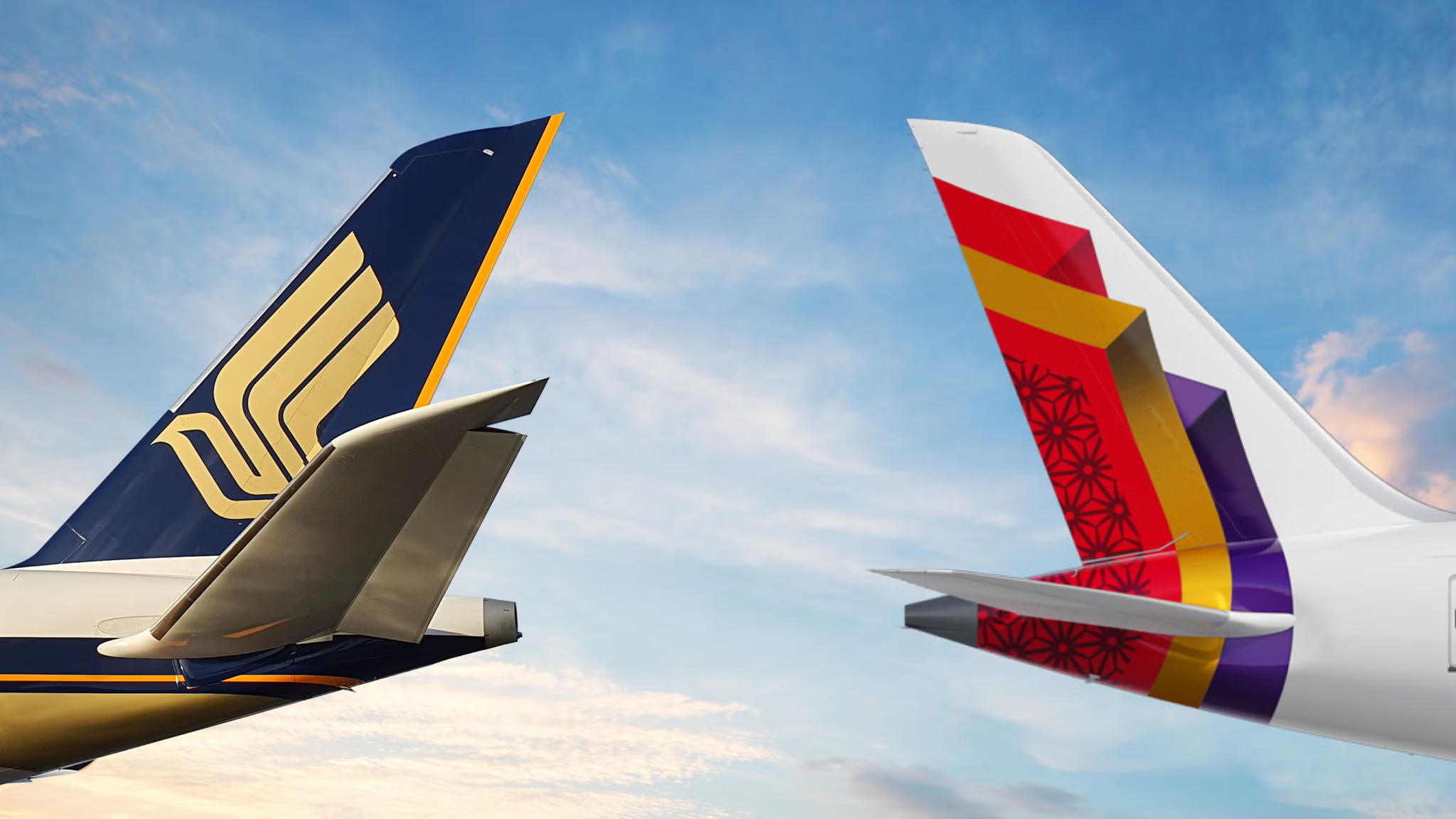
Booking a flight between India and Singapore is about to get simpler. From 15 October 2026, Air India and Singapore Airlines (SIA) will sell each other’s flights between the two countries without any strings attached. The arrangement covers 126 weekly flights linking Singapore with eight Indian cities: Ahmedabad, Bengaluru, Chennai, Delhi, Hyderabad, Kochi, Kolkata and Mumbai.
The two airlines already had a codeshare, which simply means one airline sells a seat on a flight operated by the other under its own flight number. But there was a catch. If you booked an Air India-operated flight through SIA, your trip had to include at least one SIA-operated flight, and the same rule applied the other way round. In plain words, you could not open the SIA website and buy just an Air India Mumbai–Singapore flight. That condition now goes away. Either airline’s website, mobile app or travel agent can sell the partner’s India–Singapore flight on its own. SIA holds 25.1% stake in Air India.
Frequent flyers get something too. Since April 2026, Maharaja Club and KrisFlyer members have been earning miles on more fare types when flying the partner airline. From the April–June quarter of 2027, top-tier members (Maharaja Club Platinum and KrisFlyer PPS Club) will get priority check-in and boarding on the partner airline, while Silver-tier members will get extra baggage and priority boarding on eligible routes. All of this comes on top of the existing Star Alliance benefits.
Both airlines have pitched this as a customer-first move. Air India’s Chief Commercial Officer Nipun Agarwal said strategic partnerships will play a key role in Air India becoming “a leading, world-class global airline”, while SIA’s Chief Commercial Officer Lee Lik Hsin noted that demand for travel between Singapore and India “remains strong”. More is promised: better-timed connections, offers for corporate customers and a smoother travel experience overall.
How they got here
The relationship between the two groups is not new. Vistara, a 51:49 joint venture between Tata Sons and SIA, took off in January 2015. In January 2022, the Tata Group took back Air India, and later that year it announced that Vistara would be merged into Air India, with SIA picking up a 25.1% stake in the enlarged airline. The merger was completed in November 2024. When two airlines that compete on the same routes come under one roof, the competition regulator gets worried, and rightly so. The Competition Commission of India (CCI) cleared the deal in September 2023, but only after the airlines offered “voluntary commitments” that became conditions of the approval. On the India–Singapore market, Air India and SIA each committed to keep flying a minimum level of capacity, broadly at pre-COVID levels, between Singapore and Delhi, Mumbai, Chennai and Tiruchirappalli. Singapore’s own competition regulator, the CCCS, asked for similar assurances before giving its nod.
The logic was simple. If SIA owns a quarter of Air India, what stops one airline from quietly pulling out of a route and leaving the other to raise fares? The CCI’s answer was to make both keep their planes in the air. In January 2026, the two airlines signed a Commercial Cooperation Framework Agreement. The 15 October change is the first phase of that agreement.
Reading between the lines
The CCI made sure the seats stay in the market, with both airlines required to keep flying. What this week’s announcement does is place those seats in each other’s shop window. For a passenger, that means seeing both airlines’ timings in a single search, which is genuinely useful. Two airlines that share an owner, a loyalty ecosystem and now each other’s sales counters start behaving more and more like one. The promise of “improved schedule connectivity” is airline language for spacing out departures so that the two do not leave within minutes of each other. That gives travellers a better spread of timings, but it also means less head-to-head racing for the same passenger. The budget end of the market tells a similar story. Scoot is SIA’s low-cost arm and Air India Express belongs to Air India, so a large part of the low-fare capacity on this market also sits within the same two groups. That leaves IndiGo as the main independent Indian carrier between India and Singapore.

Network Thoughts
For the everyday traveller, this is a welcome change. One practical tip: when you search, compare the fare on both airlines’ websites, as the same flight can be priced differently depending on who sells it. And if you collect miles with one programme, booking through that airline now gives you access to a wider set of flights.
For now, the passenger gets more choice at the click of a button, and an India–Singapore market that remains one of the busiest international corridors out of India. As long as IndiGo and other carriers keep a strong presence, the partnership should work in the traveller’s favour rather than against it. A good start, and one worth watching closely. Schedule co-ordination, joint ventures and metal neutral pact are very common across partnerships and more so in case of equity partnerships. With the SIA group making public statements on commitment to Air India even with heavy losses, the next logical steps are being taken rapidly.
Found this article informative? Think of supporting Network Thoughts with Power of 10

Running this website incurs some cost, along with the data sourced for analytics. If you have liked this article, consider paying INR 10 via UPI. The site will continue to be free. This will help with the maintenance, upkeep and funding the research. You can also pay via Debit or Credit card by clicking on this link.
You can support Network Thoughts by ordering Network Thoughts baggage tags and lapel pins !
Follow NetworkThoughts on X (Formerly Twitter), Bsky, Facebook and YouTube