

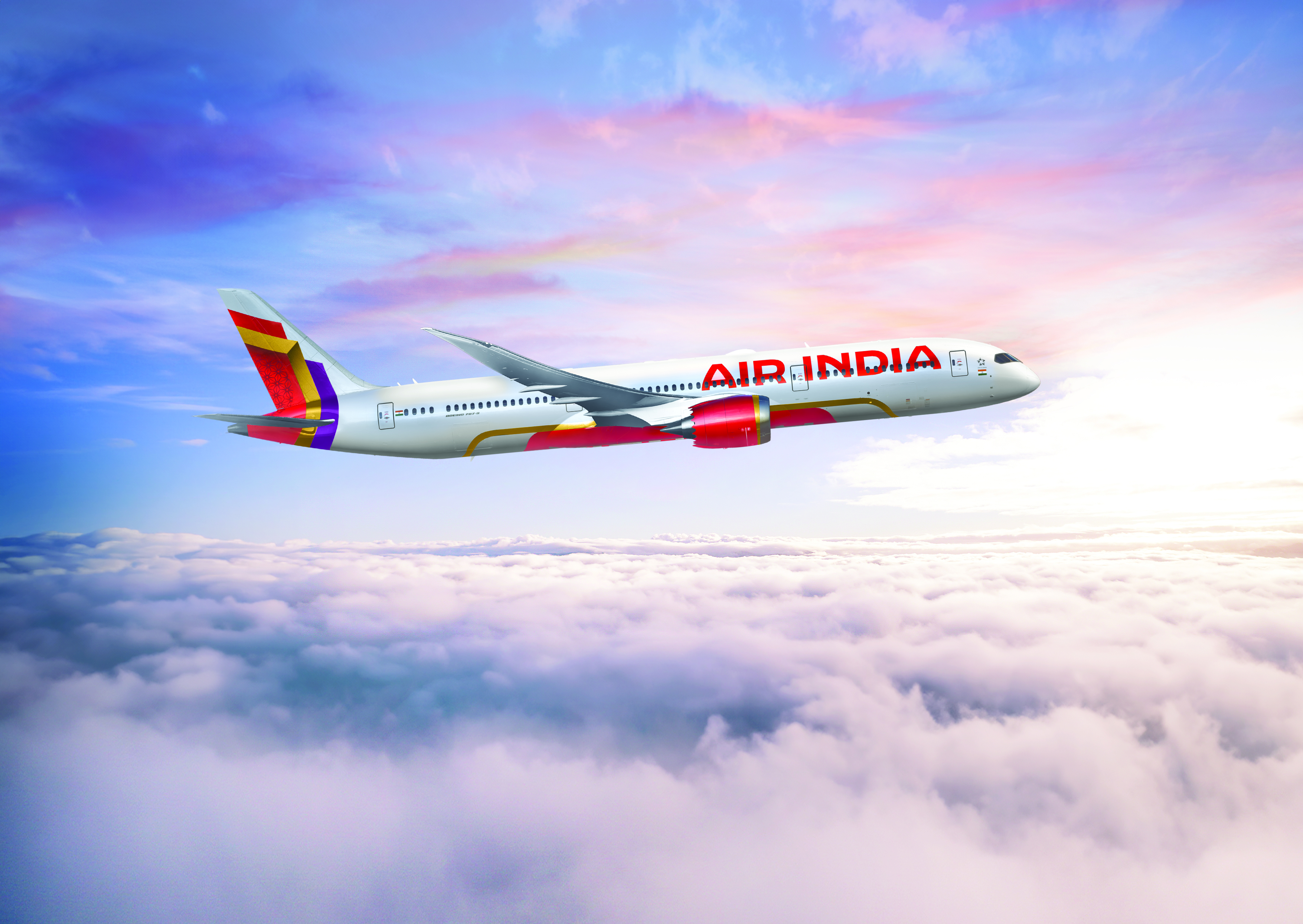
From August 1, 2026, Air India will fly non-stop between Delhi and Toronto, retiring the Boeing 777-300ER on the route in favour of the newly delivered Boeing 787-9 Dreamliner. The switch does more than swap one widebody for another — it eliminates the technical fuel stop at Vienna that has long added hours to the journey, and it restores daily frequency on a route that has been running at a reduced five-times-a-week schedule since early summer. For a route that connects India to one of the largest Indian diaspora communities in North America, this is one of the more consequential network changes Air India has made this year.
This change also led to three other routes seeing the B777-300ER being deployed replacing the 787-8 Dreamliner on their routes. These routes are Amritsar – London Gatwick, Ahmedabad – London Gatwick and Amritsar – Birmingham. This would also mean short domestic flights being available on the B777-300ER on some days of the week.
Why the change?
The Vienna stop was never a passenger convenience — it existed purely for operational reasons. The 777-300ER, while a capable long-haul workhorse, could not comfortably cover the roughly 11,300-kilometre Delhi–Toronto sector non-stop with a full payload, especially westbound with the airspace closure over Pakistan. Air India addressed this by routing the aircraft through Vienna for a brief technical halt to top up fuel before continuing on to Toronto. The return flies non-stop.
The 787-9 changes that equation. It is a more fuel-efficient, longer-range aircraft than the 777-300ER, built specifically for exactly this kind of “thin,” ultra-long-haul city pair that doesn’t justify a larger jet but still demands serious range. With the Dreamliner’s better fuel burn and range performance, Air India can now fly Delhi to Toronto directly, subject to available airspace along the route.
There’s also a fleet and brand story behind the move. Air India has been steadily rolling out its new-generation cabin products across its widebody fleet as part of its post-privatisation transformation under Tata ownership. Toronto becomes the first Canadian destination to receive this newest 787-9 product.
The frequency restoration is a separate but related thread. Air India had trimmed the route down from daily to five weekly flights during June and July 2026, citing a sharp rise in fuel costs and geopolitical developments that affected operating conditions more broadly. Airspace disruptions in the region through 2025 and 2026 have repeatedly forced Indian carriers to re-route flights, burn more fuel, and in some cases pull back capacity. The August 1 change effectively reverses that cutback, signalling the airline’s confidence in demand recovery on the corridor even as it delivers a faster product.
The changes land together on August 1, 2026. That is the date the 787-9 replaces the 777-300ER on flights AI187 and AI188, the date the Vienna stop disappears, and the date the route reverts from five weekly flights back to a daily operation. Bookings for the upgraded service are already open across Air India’s website, mobile app, contact centre, and travel agents.
Under the revised schedule, AI187 departs Delhi at 1:45 am and lands in Toronto at 9:30 am local time, cutting the outbound journey to around 17 hours from roughly 20 hours including the Vienna halt — a saving of nearly three hours. The return flight, AI188, leaves Toronto at 12:30 pm and arrives in Delhi at 2:05 pm the following day, a non-stop sector that was already flown direct and will continue at up to 16 hours, since tailwinds make the eastbound leg comfortably achievable for the aircraft without a fuel stop even today.
Network Thoughts
The Dreamliner arrives with Air India’s latest three-class cabin: 30 Business Class suites with direct aisle access, fully flat beds, wireless charging and 17-inch 4K entertainment screens; 28 Premium Economy seats, a cabin making its debut on this route entirely; and 238 Economy seats with upgraded ergonomics, personal 11.6-inch screens, USB charging and Bluetooth audio pairing. Passengers also gain wellness-inspired mood lighting throughout the cabin, a signature touch of Air India’s new product rollout.
For travellers, the net effect is straightforward: a shorter, single-leg journey; a genuinely new premium economy option where none existed before; upgraded seating across all three cabins; and a daily flight instead of a five-times-weekly one, giving far more scheduling flexibility for the India-Canada corridor. It’s a rare case of an airline improving speed, comfort and frequency on the same route in a single stroke — even if the ultimate reliability of the non-stop routing will depend on how regional airspace access holds up in the months ahead.
Found this article informative? Think of supporting Network Thoughts with Power of 10

Running this website incurs some cost, along with the data sourced for analytics. If you have liked this article, consider paying INR 10 via UPI. The site will continue to be free. This will help with the maintenance, upkeep and funding the research. You can also pay via Debit or Credit card by clicking on this link.
You can support Network Thoughts by ordering Network Thoughts baggage tags and lapel pins !
Follow NetworkThoughts on X (Formerly Twitter), Bsky, Facebook and YouTube