

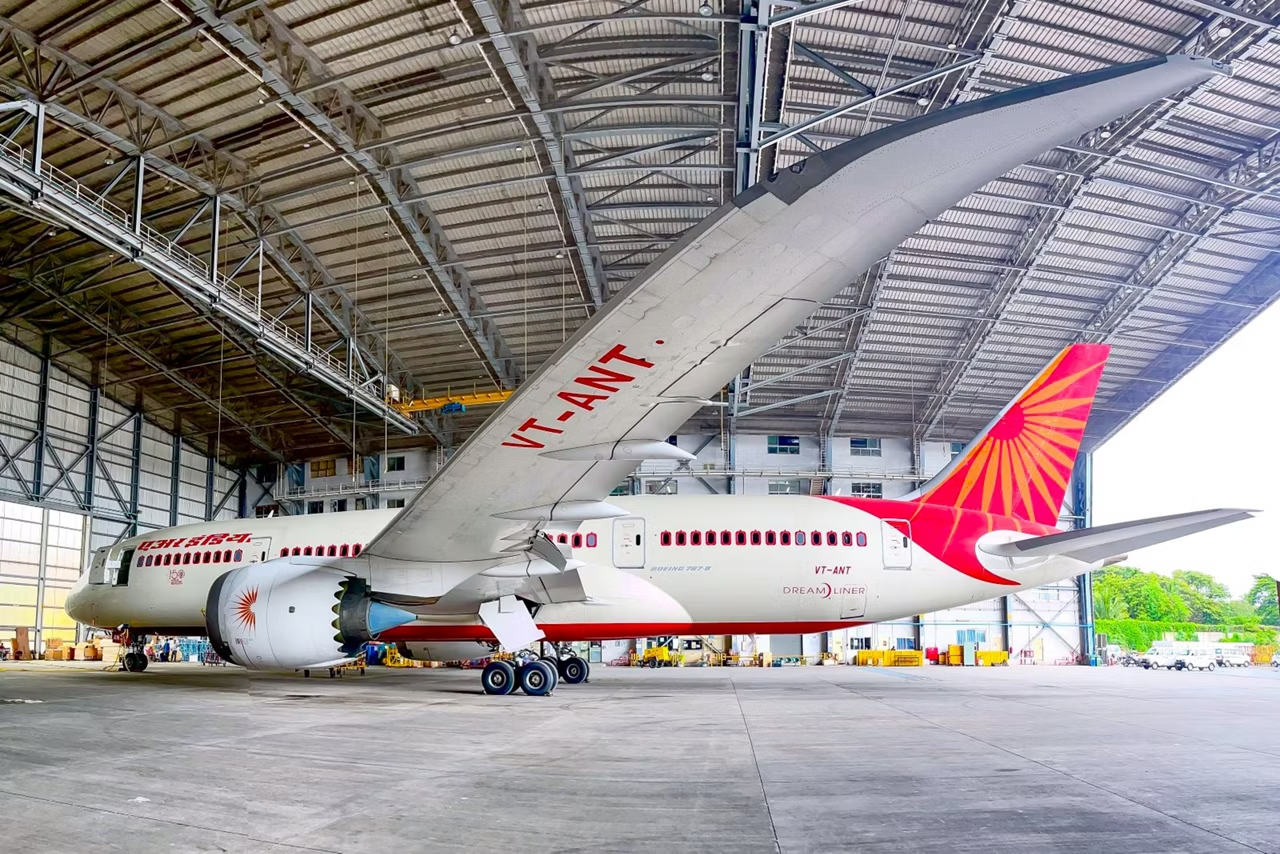
Air India, which has recently been in the news for suspension of services, will be going ahead with the launch of flights to Tokyo Haneda from Mumbai starting June 15, 2026. The airline made this announcement in early March, days after the West Asia war started. The airline had announced the flights to operate four times a week, operating the legacy 787-8 aircraft in dual class, with 256 seats comprising 18 Business Class and 238 economy class seats. In July, the airline is reducing the frequency to thrice a week service.
AI356 BOM1650 – 0455(+1)HND
AI355 HND0850 – 1420BOM
Flights operate on Mondays, Wednesdays, Fridays and Sundays from Mumbai and Mondays, Tuesdays, Thursdays and Saturdays from Tokyo Haneda.
In July, the Friday departure from Mumbai and Saturday departure from Tokyo Haneda is dropped. Air India operates a daily service to Tokyo Haneda from Delhi, and offers the refurbished product, making a strong case for the Mumbai – Haneda service to shift to a refurbished product soon. Air India has an active codeshare partnership with ANA, providing connections to Fukuoka, Hiroshima, Nagoya, Okinawa, Osaka and Sapporo
JAL remains the largest player in the market with 17 weekly frequencies, shows data obtained from Cirium, an aviation analytics company. Air India would have 10 frequencies a week, while ANA will offer 13. In terms of seats, JAL will offer 3448 seats a week each way, followed by ANA at 3156 seats. Air India will offer 2527 seats each week with its two flights.
India–Japan Traffic: A Market with Significant Untapped Potential
Despite strong economic ties between India and Japan, air connectivity between the two nations remains relatively modest compared to markets such as India-Singapore, India-Thailand or India-UAE.
The relationship between the two countries has deepened considerably over the last decade. Japanese investments in India have expanded across manufacturing, automotive, electronics, infrastructure and technology sectors. Companies such as Toyota, Suzuki, Honda, Sony, Hitachi and Mitsubishi maintain substantial operations in India, while Indian IT firms have steadily increased their presence in Japan.
Tourism is also emerging as an important demand driver. Japan has become increasingly popular among Indian leisure travellers, aided by improved visa processes, growing awareness of Japanese destinations and increased disposable incomes among Indian consumers. Meanwhile, Japan continues to attract Indian students and professionals seeking opportunities in technology, engineering and research sectors.
However, the market remains underpenetrated when compared with its long-term potential. This creates an opportunity for Air India to stimulate demand through nonstop connectivity and stronger network integration.


For decades, Narita served as Tokyo’s primary international gateway. However, Haneda has steadily emerged as the preferred airport for premium travellers due to its proximity to central Tokyo. Located much closer to the city centre than Narita, Haneda significantly reduces transfer times and improves the overall passenger experience. Air India recognised this advantage when it shifted its Delhi operations from Narita to Haneda in 2025.
The success of the Delhi-Haneda transition likely provided the confidence needed to launch Mumbai-Haneda services. Corporate travellers, who form a substantial segment of India-Japan traffic, typically place a premium on time savings and convenience. Access to Haneda gives Air India a stronger competitive proposition against carriers routing passengers through Southeast Asian hubs.
Network Thoughts
Adding flights from Mumbai is a natural progression for Air India for most of its routes going forward. Over a period of time, the widebody network will see frequency addition such that both Delhi and Mumbai are connected, offering seamless connectivity and the ability to better manage the revenue on the lines of what Lufthansa does with Frankfurt and Munich.
How will the airline cope up with increasing losses, geopolitcal situation and delays in delivery along with refurbishment is what needs to be looked at closely rather than anything else at the moment.
Found this article informative? Think of supporting Network Thoughts with Power of 10

Running this website incurs some cost, along with the data sourced for analytics. If you have liked this article, consider paying INR 10 via UPI. The site will continue to be free. This will help with the maintenance, upkeep and funding the research. You can also pay via Debit or Credit card by clicking on this link.
You can support Network Thoughts by ordering Network Thoughts baggage tags and lapel pins !
Follow NetworkThoughts on X (Formerly Twitter), Bsky, Facebook and YouTube