

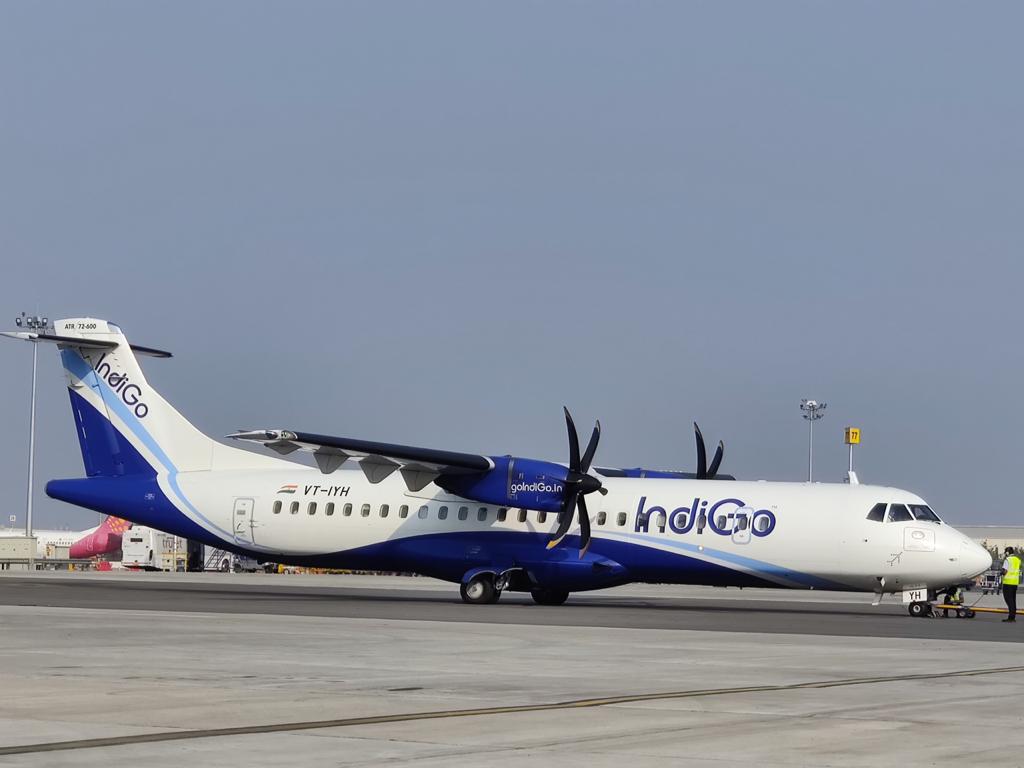
IndiGo declared its Q3-FY26 results on January 22, 2026. The airline reported a profit of INR 549.8 crore, in a quarter which saw an operational meltdown in December. Sequentially it is a swing from a loss to profit, but a drop of 78% in profit after tax on a year on year basis. Last quarter (Q2-FY26), the airline had to bear the forex loss of INR 2892.1 crore, while in the quarter for which the results were declared (Q3-FY26), the airline saw a forex loss of INR 1113.4 crore. The increased revenue ensured that the end result was positive.
“Rupee has depreciated significantly in the last 12 months by around 5%. Rupee depreciated by more than 1% at the third quarter end as compared to the second quarter end leading to a forex loss net of hedging of 10.4 billion rupees, on our dollar-based net future obligations of around 10 billion dollars.” said IndiGo’s CFO Gaurav Negi
IndiGo has an approximate 10 billion dollar USD exposure and with rupee depreciation a reality it cannot run away from, it has found three ways to handle this eventuality.
- Hedging
IndiGo has started hedging the currency. The airline is now inching towards hedging 3 billion dollars and for a longer term. This would be about 30% of its requirements. Hedging currency and fuel is a very standard practice across airlines the world over but comes with its own risks.
Currency hedging is a financial risk-management practice used to protect a company from adverse movements in foreign exchange rates. Airlines rely on it heavily because a large portion of their costs and revenues are denominated in foreign currencies—most notably the US dollar—while their ticket sales are often in local currency. Fuel hedging involves locking in the price of aviation fuel (or a related benchmark) for future consumption using financial contracts. The objective is to reduce exposure to sudden increases in fuel prices, not to speculate on price movements.
Both currency hedging and fuel hedging can be risky. AirAsia Bhd. for example found itself in huge losses in 2020 due to fuel hedging. As the world went into a lockdown, the fuel prices and consumption both collapsed but AirAsia had binding contract which led to increased losses for the airline.
- Using cash to acquire aircraft
In the early days of IndiGo, the Sale and Leaseback (SLB) model was made to look like its invention in Indian skies. The airline would lock in prices with Airbus, and closer to delivery sell the aircraft to a lessor and lease it back. The aircraft was sold at a higher rate than what it purchased for and the gain became its operating cash. The SLB market today is different than what it was a decade ago and IndiGo, too, is different today than what it was a decade ago.
Pre-COVID, IndiGo had started having aircraft on its books as assets by means of finance lease and ownership. Some of these (ATRs) were used to raise cash during the pandemic by performing a Sale and Leaseback transaction.
At the end of Q3-FY26, IndiGo had 28 owned aircraft, 58 on finance lease, 338 on operating lease and 16 on wet lease. This is a sharp increase from the previous quarter where 14 planes were owned and 62 on finance lease with 333 being on operating lease. A year ago, IndiGo had only 5 owned aircraft and 47 on finance lease. This helps reduce the outgo in USD.
A finance lease is one where the ownership transfers to the airline after the debt is paid off and debt can be raised in any currency. An operating lease is one where the ownership remains the lessor and the aircraft is returned to the lessor after the end of lease term. The lease rentals are paid at periodic intervals in currency agreed upon at the time of signing the lease.
- Growth of international operations
International operations see tickets being sold across various regions outside India. For example, IndiGo now offers passengers a choice to fly from points in the UK to Singapore or Thailand, with the bookings being done in Pound as per pricing, with the settlement often being in USD. This is non-INR revenue which acts as a natural hedge against the sliding rupee and buffers the airline to an extent.
Comparing November 2025 to November 2024, as a sample month; IndiGo has grown its capacity by 17% in ASK (Available Seat Kilometers). However, the increase is not the same across domestic and international routes. The domestic increase is 9% while the increase in capacity on international routes is 39%. While a year ago, 73% of IndiGo’s capacity was on domestic routes, today the split is 68% domestic and 32% international. Some bit of this is also because of the damp leased 787-9 dreamliner which it operates.
Additional international operations which help carry traffic via India adds the buffers in currency and helps absorb the depreciation shock.
Network Thoughts
At this moment, IndiGo would also be paying the PDPs (Pre Delivery Payments) for its large order with Airbus, including the A350s which also puts pressure on its cost side. India is yet to reach pre-pandemic levels of Foreign Tourist Arrivals (FTAs), though Indians are traveling abroad more than ever. The pressure from Rupee depreciation will be high on this segment going forward and the focus thus shifts on connecting East to West and vice versa.
With Pakistan airspace closure impacting the expansion to Central Asia, the future could be a lot of Thailand, Malaysia, Singapore and Indonesia for the airline, subject to rights available under Bilateral Agreements.
—
Found this article informative? Think of supporting Network Thoughts with Power of 10

Running this website incurs some cost, along with the data sourced for analytics. If you have liked this article, consider paying INR 10 via UPI. The site will continue to be free. This will help with the maintenance, upkeep and funding the research. You can also pay via Debit or Credit card by clicking on this link.
You can support Network Thoughts by ordering Network Thoughts baggage tags and lapel pins !
Follow NetworkThoughts on X (Formerly Twitter), Bsky, Facebook and YouTube