

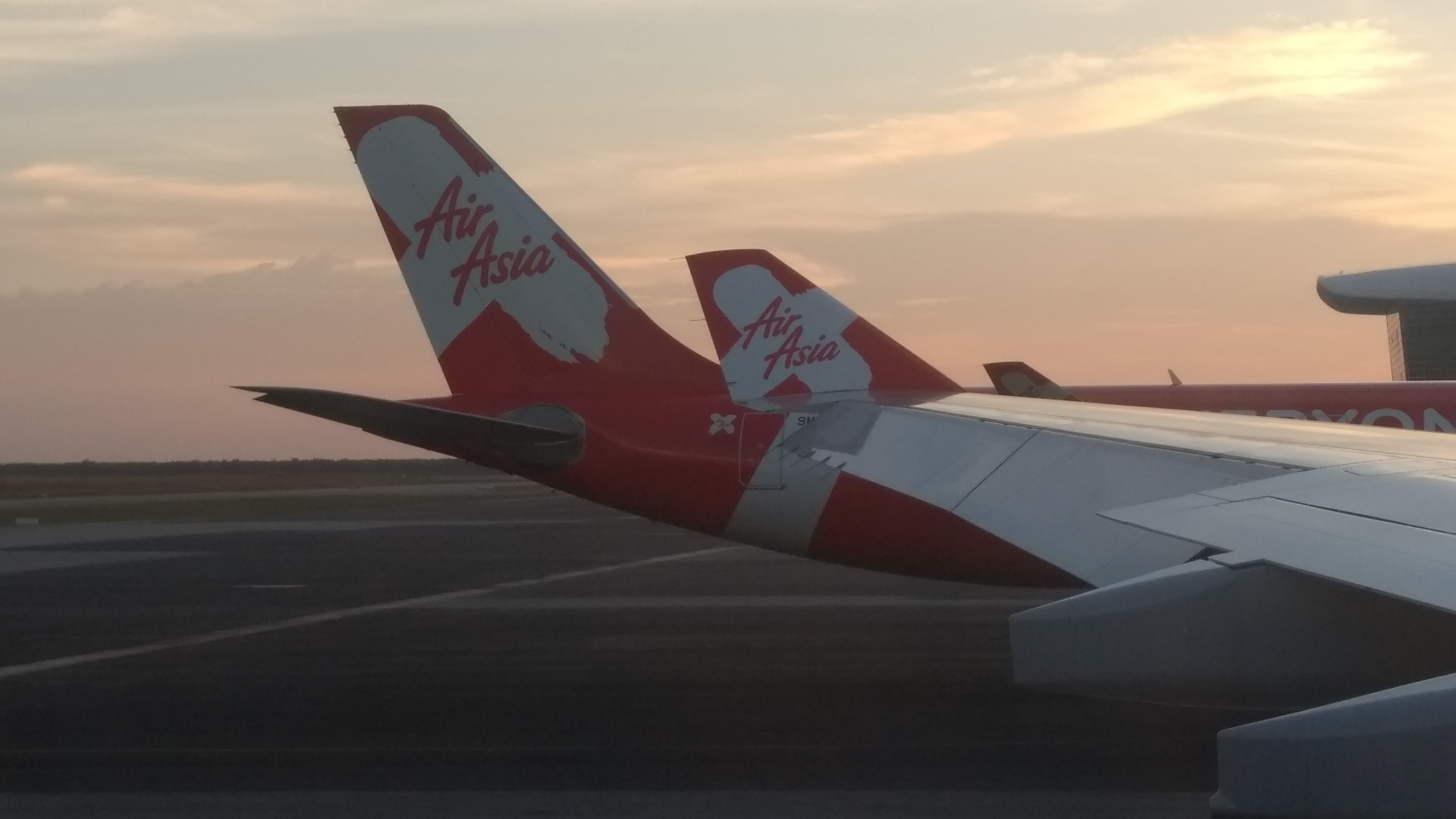
AirAsia X is pulling out of its only route to India, with the Kuala Lumpur – Delhi route sunsetting at the end of current Summer schedule. This comes amidst news reports of AirAsia group facing headwinds and AirAsia X, the long haul arm of the group having cancelled multiple sectors recently. The carrier currently runs the route four times weekly with Airbus A330-300s, flight numbers D7182 and D7183. It is the airline’s only India route, having pulled out of the Kuala Lumpur – Amritsar route earlier and its exit hands the Delhi–Kuala Lumpur market entirely to Malaysia Airlines, Air India and Batik Air Malaysia.
As of today, Malaysia Airlines offers 38% of all seats on the Delhi – Kuala Lumpur sector, followed by 24% of Air India while AirAsia X offers 20%, the remainder being with Batik Air Malaysia. While Delhi is just one of the many long haul routes being cut due to “Network Optimisation”, prima facie it looks like Air India pushed out the weakest link in the market.
It was reported by Network Thoughts contributor BOMLHR on X.
A route with a longer memory than it looks
Air India’s own presence here is barely two years old. The airline launched daily, two-class A320neo flights between Delhi and Kuala Lumpur on 15 September 2024, becoming only the second Indian carrier on the route and ending a 8-year gap for the Air India group in Malaysia dating back to when Air India Express shut its Chennai service in 2016. Indian Airlines last operated to Malaysia back in 2008, making this a return after 16 years for full service Air India operation.
Growth came in steps: a jump to ten weekly frequencies from mid-November 2025, using a mix of single and double flights on Tuesday through Sunday to cut down the overnight halt in Kuala Lumpur, followed by a brief step back to five times weekly through August 2026 as part of a wider, fuel-cost-driven rationalisation of Air India’s international network, before frequency was restored.
IndiGo’s history on this city pair is the more interesting gap. IndiGo launched daily flights from Delhi and Bengaluru to Kuala Lumpur in November 2018, deliberately choosing to fly into KLIA2, AirAsia’s own home hub, at a time the two were already locked in a bitter domestic fare war. It followed up with a double-daily Chennai–Kuala Lumpur service in mid-2019. Post-pandemic, IndiGo’s return to Malaysia was selective: Chennai came back first, Bengaluru only resumed in December 2024 alongside a new Chennai to Penang route, but Delhi never returned.
The India – Malaysia route has traditionally been dominated by Malaysian carriers who relied on the large O-D traffic from Tamil Nadu, along with transfer traffic competing with Singapore and Thailand. AirAsia Bhd. was the largest carrier between India and Malaysia for most part of the last decade.
Who’s actually under pressure here
The more revealing story lies in AirAsia Group’s own numbers, and it argues against reading this as Air India “pushing” anyone out. AirAsia Group posted a net loss of RM527.16 million for the second quarter of FY2026, hit by average jet fuel prices rising 66% quarter-on-quarter amid Middle East-driven geopolitical tension, plus a RM331 million foreign exchange loss as regional currencies weakened against the dollar. In response, the group has guided to cutting seat capacity by 20–25% year-on-year in the third quarter, while returning 25 older, less fuel-efficient aircraft.
Delhi is casualty, not target. In the same window, AirAsia X has also walked away from Kuala Lumpur–Tashkent, Kuala Lumpur–Sydney, Kuala Lumpur–Chongqing, and cancelled planned launches to Bahrain–London Gatwick and a Busan resumption. Air India’s steady climb on this route is real, but it’s opportunistic rather than causal: a widebody-light, cost-stressed AirAsia X was always the softest capacity on a route where it wasn’t even the largest player to begin with. However, the AirAsia group has the A320neo which can now operate the Kuala Lumpur – Delhi route comfortably unlike the past when the A320ceo struggled for this.
Network Thoughts
Air India is moving swiftly in a market which is losing capacity. However the market is different for different players with a large part of Air India traffic and timings destined for connections to Europe and America, while Malaysia Airlines and AirAsia group have focused on traffic beyond Kuala Lumpur to Australia and other points in ASEAN, including Singapore, Indonesia, Vietnam. Over the last few years, India saw direct connectivity with Indonesia, snatching that traffic from the Malaysian carriers, likewise Vietnamese carriers have 50+ weekly flights to India, which also took away significant transit traffic.
This will help Air India cater to the shortfall of seats in the sector. The angle worth watching is what Malaysia’s regulator does with AirAsia X’s vacated bilateral capacity. Malaysia’s aviation regulator has a track record of moving quickly to revoke or reallocate unused traffic rights among its own carriers rather than let them sit idle, and it has done exactly this kind of reshuffle on India routes before. If Delhi rights land with Malaysia Airlines rather than Batik Air Malaysia, it stretches MH’s lead further and leaves Batik Air exposed to the competition between two full service carriers. Will the tide turn for AirAsia quickly and will it replace AirAsiaX with AirAsia Bhd flights? Will this provide a reentry for IndiGo? Winter schedule just got interesting.
Found this article informative? Think of supporting Network Thoughts with Power of 10

Running this website incurs some cost, along with the data sourced for analytics. If you have liked this article, consider paying INR 10 via UPI. The site will continue to be free. This will help with the maintenance, upkeep and funding the research. You can also pay via Debit or Credit card by clicking on this link.
You can support Network Thoughts by ordering Network Thoughts baggage tags and lapel pins !
Follow NetworkThoughts on X (Formerly Twitter), Bsky, Facebook and YouTube